
When a dental crown does not seat fully, it can prevent proper cementation, affect bite alignment, and lead to discomfort or long-term complications. While this situation can be frustrating, it is a relatively common issue that usually has an identifiable cause.
Understanding why a crown won’t seat completely helps patients know what is happening during the appointment and why adjustments may be necessary before the crown can be permanently placed.
1. Inadequate Tooth Preparation
If the tooth is not reduced evenly or sufficiently, the crown may not have enough space to seat fully. Even small areas of excess tooth structure can prevent complete seating.
2. Occlusal Interference
Contact with opposing teeth can stop a crown from seating all the way. This is often identified during bite checks and corrected before cementation.
3. Residual Temporary Cement or Debris
Any remaining temporary cement, buildup, or debris on the tooth can block proper seating. Thorough cleaning of the preparation is essential.
4. Undercuts on the Prepared Tooth
Undercuts occur when parts of the tooth angle inward, preventing the crown from sliding into place. These must be corrected before final seating.
5. Margin Discrepancies
If the edges of the crown do not align precisely with the tooth margins, the crown may bind or stop short of full seating.
6. Improper Crown Contour
Overcontoured crowns can contact surrounding teeth or soft tissue prematurely, preventing complete seating.
7. Tight Contact Points
Contacts that are too tight against neighboring teeth can stop the crown from fully seating, even if everything else is correct.
8. Material Distortion
Some crown materials can slightly distort during fabrication or handling, affecting fit.
9. Tooth Anatomy Variations
Unique tooth shapes, rotations, or root anatomy can make seating more challenging and require additional adjustment.
10. Cement Thickness or Hydraulic Pressure
Excess cement or trapped air can create pressure that prevents full seating if not properly managed during placement.
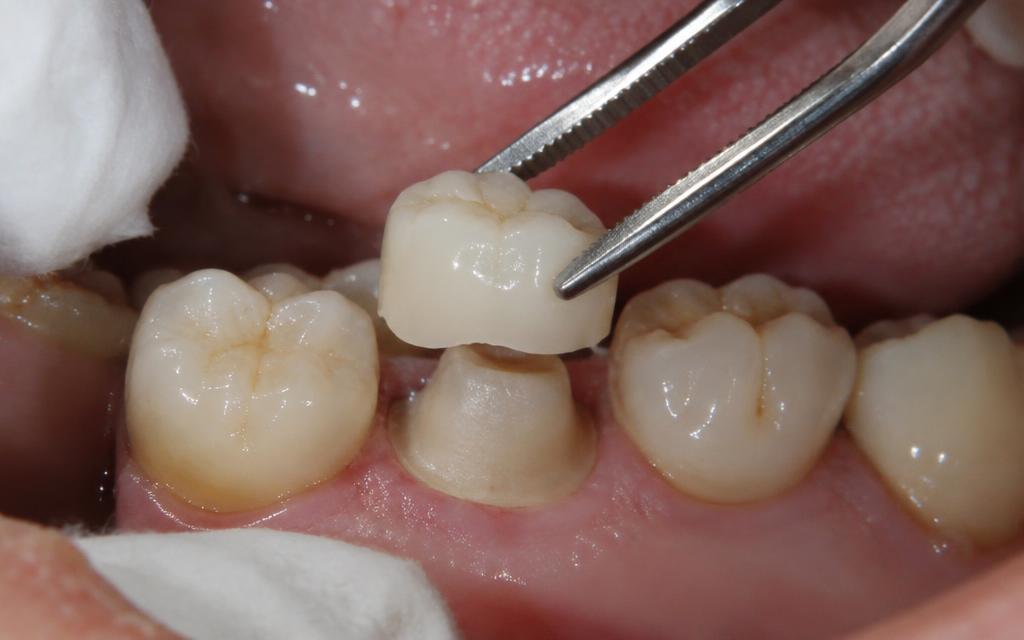
What Happens If a Crown Doesn’t Seat Fully
When a crown does not seat completely, the dentist will not cement it permanently. Instead, adjustments are made to identify and correct the cause. This process protects the tooth, bite, and surrounding tissues.
In most cases, the issue can be resolved chairside without the need to remake the crown.
When Patients Should Be Concerned
A crown should never be forced into place. If seating issues persist despite adjustments, further evaluation is necessary to prevent long-term problems such as bite imbalance, gum irritation, or crown failure.
For more information on crown fit concerns, bite adjustments, and common restoration issues, visit our Dental Education Hub, where related topics are organized to help patients better understand treatment outcomes and next steps.
Looking for more? Browse our full library of dental education resources.
Back to Education Center