
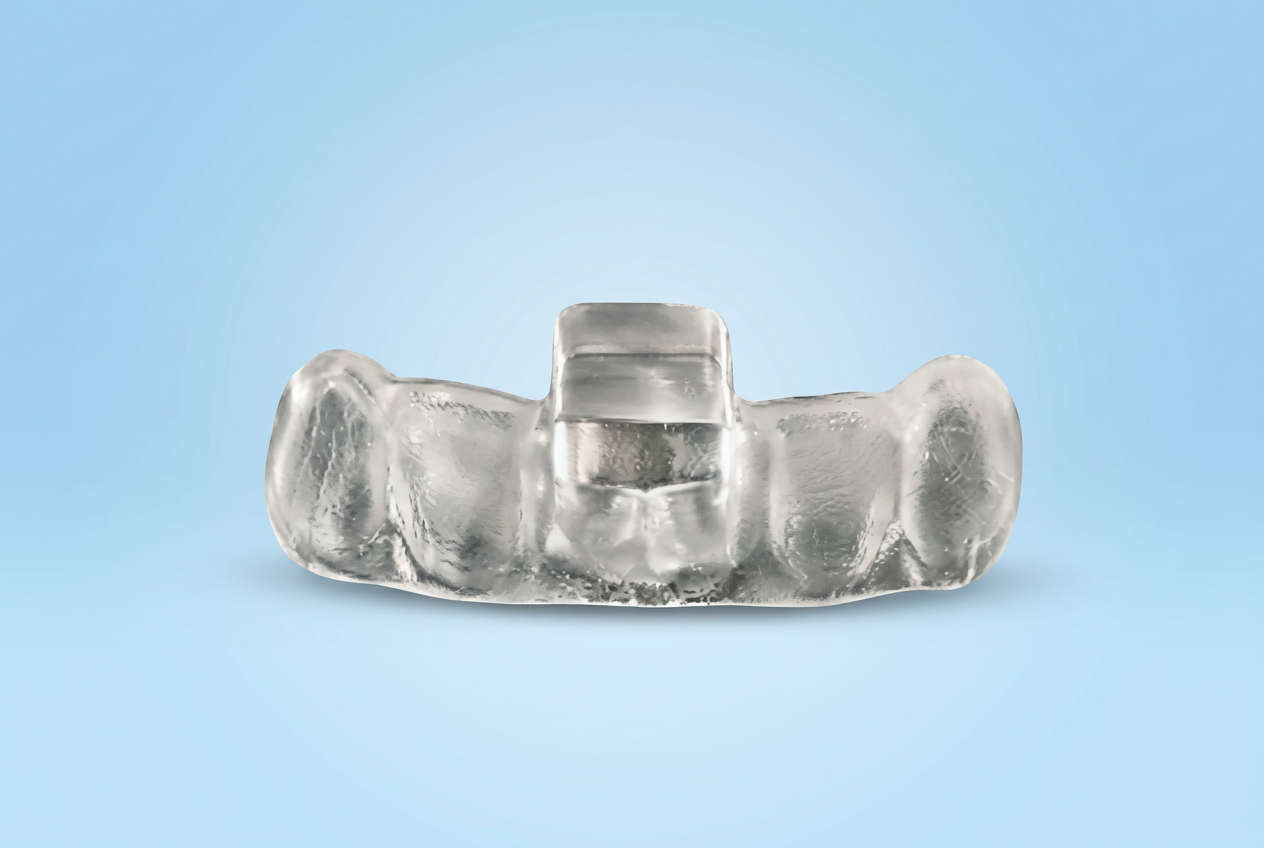
The NTI dental appliance—also known as the NTI-TSS (Nociceptive Trigeminal Inhibition – Tension Suppression System)—is a small, custom-made anterior bite device designed to reduce the muscle activity that drives bruxism, clenching, and related tension headaches. Despite its small size, the NTI is an FDA-cleared medical device with a well-documented ability to decrease the forces generated during clenching by preventing full posterior tooth contact.
For patients with chronic grinding, migraine-related jaw tension, or TMJ-associated muscle pain, the NTI provides a targeted and clinically supported alternative to traditional night guards.
What Is an NTI Dental Appliance?
The NTI is an anterior-only deprogramming device worn typically at night. Unlike full-arch night guards that cover all the teeth, the NTI sits on the front teeth and prevents the molars from engaging during clenching.
This disruption in posterior contact reduces the activation of the temporalis and masseter muscles—two of the strongest muscles in the human body—resulting in a dramatic drop in clenching intensity.
Clinical uses include:
-
Sleep bruxism (nighttime grinding or clenching)
-
Daytime clenching habits
-
Muscle-based TMJ pain
-
Tension-type or migraine-related symptoms triggered by jaw overuse
The NTI is not a cosmetic appliance and not a treatment for sleep apnea. Its primary purpose is functional protection and muscle activity reduction.
How the NTI Works: Mechanism & Clinical Rationale
During clenching, the brain recruits powerful elevator muscles to generate bite force—often up to 5–6 times stronger at night than during the day. The NTI disrupts this pathway.
Core Mechanisms:
1. Anterior Contact Only
By allowing contact only on the incisors, the NTI triggers a natural protective reflex that stops the elevator muscles from firing at full strength.
2. Posterior Disclusion
Preventing molar engagement reduces force generation dramatically, often by more than 50% compared to full-mouth contact.
3. Neuromuscular Deprogramming
Over time, the device helps break the cycle of habitual clenching and decreases muscle hyperactivity.
This combination makes the NTI one of the most effective appliances for patients whose primary issue is muscle-driven, not joint-driven.
NTI vs. Traditional Night Guards
Many patients assume all night guards do the same thing—protect teeth from grinding. But the NTI functions differently and is often chosen when the standard devices fall short.
Traditional Night Guards
-
Cover all upper or lower teeth
-
Protect enamel from wear
-
Absorb forces but do not reduce clenching strength
-
Ideal for general grinding protection
NTI Dental Appliance
-
Covers only the front teeth
-
Reduces clenching forces at the muscular level
-
Often better for jaw-muscle pain, migraines, and bite-force–related symptoms
-
Feels smaller and less bulky
-
Requires closer follow-up and professional monitoring
Both devices have a place in treatment, but they address different underlying problems.
Who Is a Good Candidate for an NTI?
Patients may benefit from an NTI appliance if they experience:
-
Morning headaches or temple aches
-
Soreness in jaw muscles after waking
-
Flattened or worn teeth from grinding
-
Clenching during stress or concentration
-
TMJ discomfort caused by muscle overuse
-
A history of night guards that reduced wear but not pain
Patients who may not be ideal candidates:
-
Those with significant joint displacement issues
-
Patients with unstable bites or mobility in the front teeth
-
Individuals who cannot attend follow-up appointments
-
Severe sleep apnea patients requiring CPAP or an airway appliance
A dentist determines candidacy through an exam and detailed bite evaluation.
Risks, Contraindications & the Importance of Follow-Up
The NTI is safe and effective when monitored properly, but like any anterior-only device, it requires periodic adjustments.
Potential Risks if Unmonitored:
-
Changes in bite from uneven tooth contact
-
Tooth or gum irritation from improper wear
-
Worsening TMJ symptoms in certain joint-based disorders
Why Follow-Up Matters
Dentists typically review the appliance at:
-
Initial delivery
-
2–4 weeks
-
Ongoing intervals every 3–6 months
These visits ensure proper fit, distribution of forces, and protection against unwanted bite changes.
How NTI Dental Appliances Are Made
Modern NTI fabrication benefits significantly from digital workflows.
Digital Impression Workflow
-
Intraoral scanners capture precise digital models
-
Files are transmitted directly to the dental lab
-
The appliance is milled or printed with micrometer accuracy
Benefits of Digital Fabrication
-
More accurate fit
-
Faster turnaround
-
Better communication between dentist and lab
-
Reduced need for adjustments
For a small device like the NTI, precision is particularly important to ensure proper anterior contact and comfort.
Maintenance & Care
To keep an NTI appliance functioning properly:
-
Clean daily with mild soap and a soft brush
-
Avoid hot water that may warp the material
-
Store in a ventilated case
-
Bring it to dental checkups for inspection
Most NTIs last 1–2 years depending on clenching strength and material choice.
What Patients Can Expect During Treatment
Fitting
The dentist adjusts the appliance to contact only the front teeth and sets the proper vertical height.
Initial Sensations
Mild tooth pressure or awareness of the device is normal for a few nights.
Symptom Improvement
Many patients experience reduced muscle tension or morning headaches within 1–2 weeks.
Ongoing Use
Some patients wear the NTI long-term, while others transition to different guards once clenching intensity decreases.
Is the NTI Right for You?
The NTI dental appliance remains one of the most targeted, research-backed solutions for muscle-driven bruxism, clenching, and TMJ-related tension. When professionally fitted and monitored, it offers a smaller, more comfortable alternative to bulky night guards—while addressing the root cause of muscle overactivity.
If you’re struggling with chronic grinding, jaw soreness, or tension headaches, a consultation with your dentist can determine whether an NTI is the right choice for your symptoms.
Looking for more? Browse our full library of dental education resources.
Back to Education Center