
Zirconia crowns have become a standard in modern restorative dentistry due to their strength, biocompatibility, and long-term reliability. As zirconia materials and fabrication techniques have advanced, two primary crown designs have emerged: monolithic zirconia crowns and layered zirconia crowns.
While both rely on zirconia as the core material, their structural design, esthetic potential, and clinical performance differ in meaningful ways. Understanding these differences is essential for selecting the appropriate crown type for each clinical situation.
What Is a Monolithic Zirconia Crown
A monolithic zirconia crown is milled from a single, solid block of zirconia without any porcelain layering. The crown’s strength and wear resistance are derived entirely from the zirconia material itself.
Because the restoration is one continuous structure, monolithic zirconia significantly reduces the risk of chipping or delamination. This makes it a highly predictable option in high-load environments.
Monolithic zirconia crowns are most commonly prescribed for posterior restorations, bruxing patients, and cases with limited occlusal clearance. Although advances in multilayer zirconia blanks and staining techniques have improved esthetics, translucency remains more limited compared to layered designs.
What Is a Layered Zirconia Crown
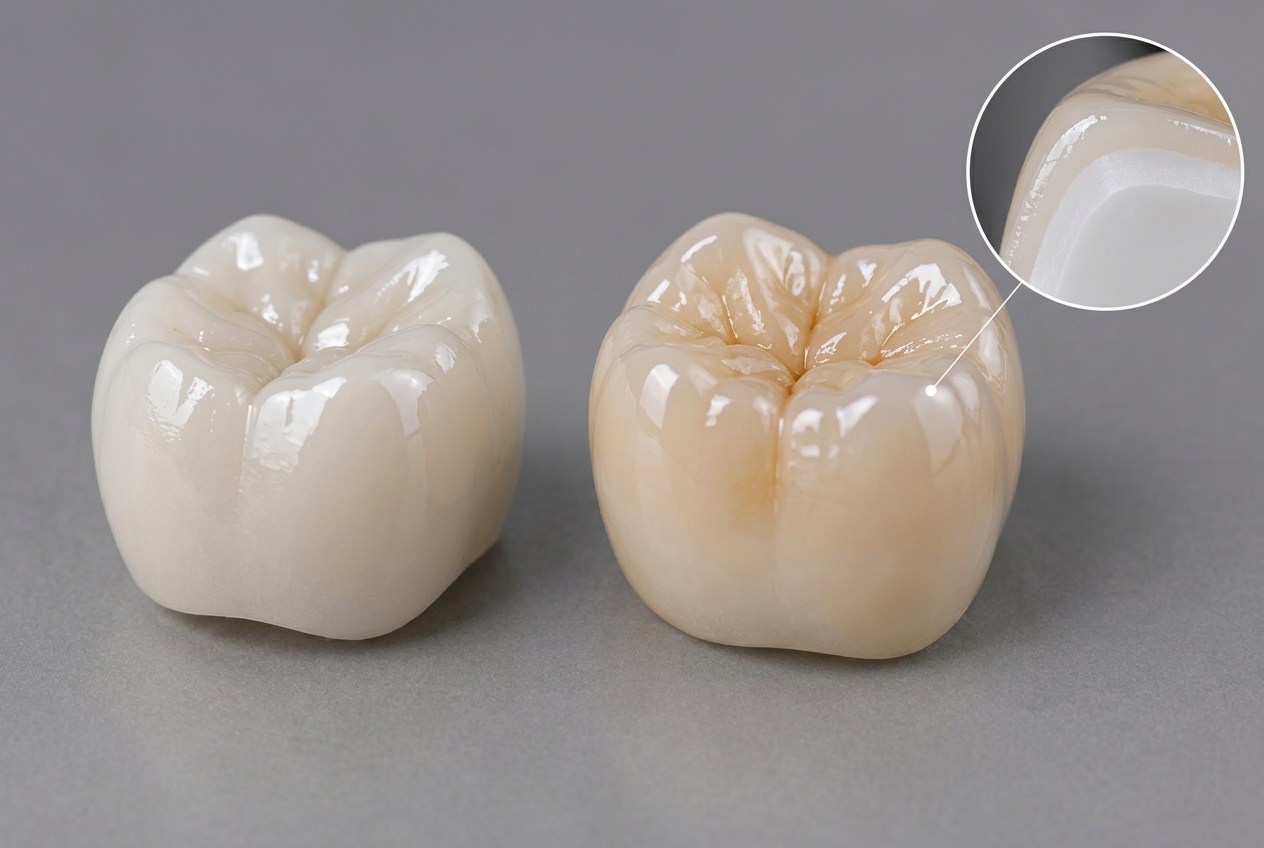
Layered zirconia crowns consist of a zirconia substructure veneered with porcelain to enhance esthetics. The zirconia core provides strength, while the ceramic layering allows for customized shade transitions, translucency, and surface texture.
This approach produces restorations that more closely mimic natural enamel, particularly in highly visible areas of the mouth. As a result, layered zirconia crowns are commonly used for anterior restorations and cosmetic cases where appearance is the primary concern.
The tradeoff is structural vulnerability. The veneering porcelain introduces a potential failure point, making layered crowns more susceptible to chipping under heavy occlusal forces or parafunctional activity. Success depends heavily on proper occlusal design, material thickness, and laboratory technique.
Strength and Durability Comparison
From a mechanical standpoint, monolithic zirconia crowns are more durable than layered zirconia crowns. Eliminating the veneering layer removes the most common source of fracture seen in layered restorations.
Layered zirconia can perform well in carefully selected cases, but their layered structure inherently increases the risk of chipping, particularly in posterior regions or in patients with high bite forces.
When longevity and fracture resistance are the primary clinical priorities, monolithic zirconia offers greater predictability.
Esthetics and Translucency Considerations
Layered zirconia crowns offer superior esthetic flexibility. Porcelain layering allows technicians to create depth, incisal translucency, and surface characteristics that closely resemble natural dentition under varying lighting conditions.
Monolithic zirconia relies on internal shading and material gradients rather than external layering. While this improves consistency and strength, it limits the level of customization available for highly esthetic cases.
For anterior restorations where shade matching and light transmission are critical, layered zirconia typically provides better visual outcomes. In posterior restorations, monolithic zirconia offers adequate esthetics with significantly greater durability.
How to Choose Between Monolithic and Layered Zirconia
There is no universally better option between monolithic and layered zirconia crowns. The correct choice depends on clinical indication rather than material preference.
Monolithic zirconia is best suited for posterior crowns, bruxing patients, limited clearance cases, and restorations where strength and longevity are the primary concerns. Layered zirconia is better suited for anterior crowns and cases where esthetics outweigh mechanical demands.
Patient expectations, occlusal forces, tooth position, and long-term risk tolerance should guide material selection.
Final Takeaway
Monolithic and layered zirconia crowns serve distinct clinical purposes. Monolithic zirconia prioritizes strength, durability, and predictability, while layered zirconia prioritizes esthetics and natural appearance.
When crown design aligns with functional demands and patient expectations, both options can deliver excellent results. Understanding the strengths and limitations of each approach allows dentists to make more confident, case-appropriate restorative decisions.
For additional material comparisons and restorative guidance, explore the Education Hub for further insights into zirconia crowns, crown design, and clinical best practices.
Looking for more? Browse our full library of dental education resources.
Back to Education Center