
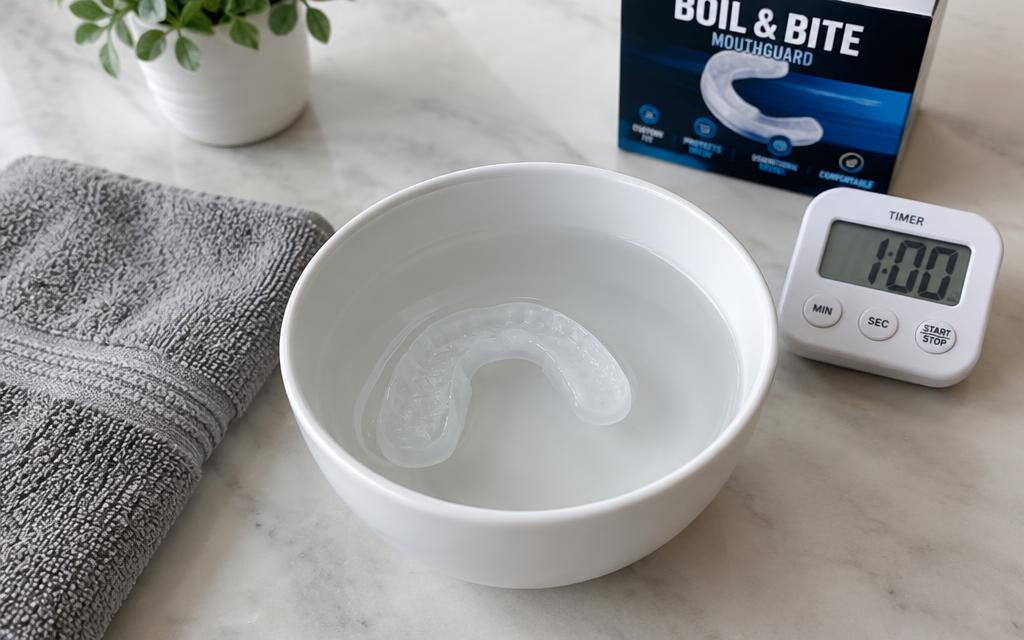
Creating a properly fitted sports mouthguard isn’t complicated, but doing it well makes a noticeable difference in comfort and protection. Instead of focusing on digital fabrication or technician-designed appliances, the goal here is to walk through the practical, at-home process of molding a standard boil-and-bite guard.
Why Fit Matters
A well-fitted mouthguard distributes impact evenly, stays secure during activity, and reduces the risk of dental injuries. Most issues people have with store-bought guards—bulkiness, slipping, difficulty breathing—come from poor molding, not the product itself.
Before you assume the factory shape is “good enough,” it’s worth challenging that assumption. The real protection comes from customizing it to your bite.
Step-by-Step Guide to Molding a Sports Mouthguard
1. Prepare Your Materials
You don’t need specialized thermoplastics here—just a standard boil-and-bite guard. Gather:
-
The mouthguard
-
A pot of hot (not boiling) water
-
A bowl of cold water
-
A timer
-
A mirror
The hidden assumption many people make is that hotter water = better molding. It doesn’t. Overheating makes the material collapse or thin out.
2. Heat the Mouthguard
Bring water to a near-boil, then remove from heat. Submerge the mouthguard for the manufacturer’s recommended time, usually 20–40 seconds.
You want it soft and pliable—if it loses structure, you’ve overheated it.
3. Position and Mold
Remove the guard with a spoon or tongs, quickly dip it in cool water for 1–2 seconds to avoid burns, then insert it into your mouth.
Bite down firmly but not aggressively. People often think a harder bite creates a better fit, but that just flattens the material.
Use your fingers to press the guard against your teeth and gums from the outside, and use your tongue to help the inner surfaces conform.
Hold this position for 30 seconds.
4. Set the Shape
Remove the guard and place it in cold water to harden. This final cooling phase locks in the shape and prevents unwanted warping.
5. Check the Fit
A good fit should:
-
Stay in place without clenching
-
Feel snug along the teeth
-
Allow normal speaking and breathing
-
Not feel overly bulky or loose at the edges
If the fit isn’t ideal, most guards can be reheated and remolded once or twice.
Read more:
How to clean night guards and sports guards
Looking for more? Browse our full library of dental education resources.
Back to Education Center