
Dental appliances play a critical role in protecting both natural teeth and existing dental restorations from long-term damage. While they are often associated with short-term symptom relief, their greatest value lies in prevention. By reducing excessive forces on teeth and restorations, dental appliances help preserve enamel, crowns, veneers, and bridges over time.
When used appropriately and monitored regularly, these devices support oral health, improve comfort, and protect prior dental investments from avoidable wear or failure.
Why Teeth and Restorations Need Protection
Daily activities such as chewing, clenching, and grinding place repeated stress on teeth. For patients with bruxism or jaw tension, these forces are significantly amplified. Over time, excessive pressure can wear down enamel, fracture restorations, or compromise the bond between a restoration and the tooth.
Restorations such as crowns and veneers are durable, but they are not immune to damage from chronic grinding or uneven bite forces. Dental appliances act as a protective buffer, absorbing and redistributing these forces before they reach the teeth or restorations.
How Dental Appliances Reduce Harmful Forces
Dental appliances function by separating the upper and lower teeth and controlling how forces are applied during clenching or grinding. This reduces direct tooth-to-tooth contact and limits concentrated pressure on individual teeth.
By distributing forces more evenly, appliances help prevent localized wear, cracking, and restoration failure. This protective effect is especially important during sleep, when grinding and clenching often occur unconsciously and with greater intensity.
Night Guards and Restoration Protection
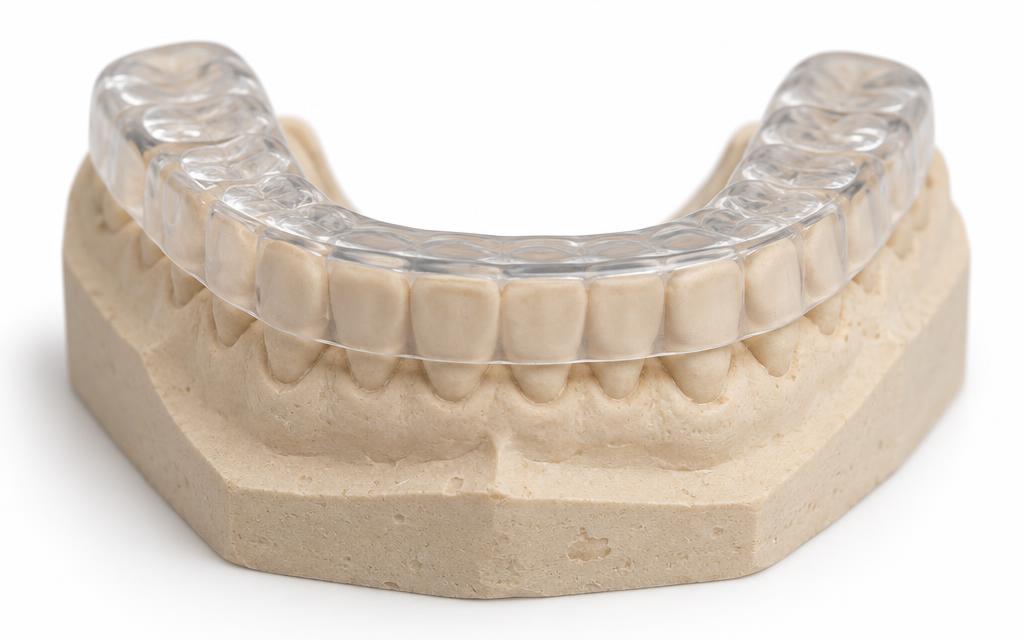
Night guards are commonly prescribed to protect teeth and restorations from the effects of bruxism. These appliances create a physical barrier that prevents enamel and restorations from grinding against opposing teeth.
For patients with crowns, veneers, or bridges, night guards help reduce the risk of chipping, surface wear, and premature failure. Over time, this protection can extend the lifespan of restorations and reduce the need for repair or replacement.
In addition to protecting teeth, night guards may also reduce jaw muscle strain, which can improve comfort and decrease morning jaw soreness.
Bite Guards and Jaw Support
Bite guards and occlusal splints provide an additional layer of protection by stabilizing how the jaws come together. These appliances are often used when jaw alignment or muscle tension contributes to excessive force.
By supporting a more balanced bite, bite guards reduce stress on both teeth and temporomandibular joints. This helps protect restorations from uneven loading, which can otherwise lead to loosening or fracture over time.
Retainers and Long-Term Tooth Stability
Retainers play an important role in maintaining tooth position after orthodontic treatment. When teeth shift out of alignment, bite forces can become uneven, increasing the risk of wear on certain teeth or restorations.
By maintaining alignment, retainers help preserve balanced contact between teeth, reducing unnecessary stress and protecting both natural tooth structure and restorations. Consistent retainer use supports long-term stability and oral health.
The Importance of Custom-Fit Appliances
Custom-fabricated dental appliances provide more predictable protection than generic options. Because they are designed based on an individual’s bite and anatomy, they fit more securely and distribute forces more effectively.
A poorly fitting appliance may shift during use or apply uneven pressure, reducing its protective benefit. Custom appliances improve comfort, encourage consistent wear, and enhance long-term effectiveness.
Professional Monitoring and Ongoing Care
Dental appliances are most effective when combined with regular professional monitoring. Routine dental visits allow for evaluation of appliance fit, wear patterns, and overall oral health.
As bite dynamics or restorations change over time, appliances may require adjustment or replacement to maintain proper protection. Early identification of wear or fit issues helps prevent damage before it becomes significant.
Protecting Your Oral Health Investment
Dental appliances are not just protective tools. They are preventive strategies that help preserve natural teeth, protect restorations, and support long-term oral health. When used as part of a comprehensive care plan, they reduce the likelihood of future dental complications and extend the life of restorative work.
Consistent use, proper care, and regular evaluation ensure these appliances deliver lasting value and protection.
Looking for more? Browse our full library of dental education resources.
Back to Education Center