
Glazed vs Polished Zirconia: Impact on Longevity
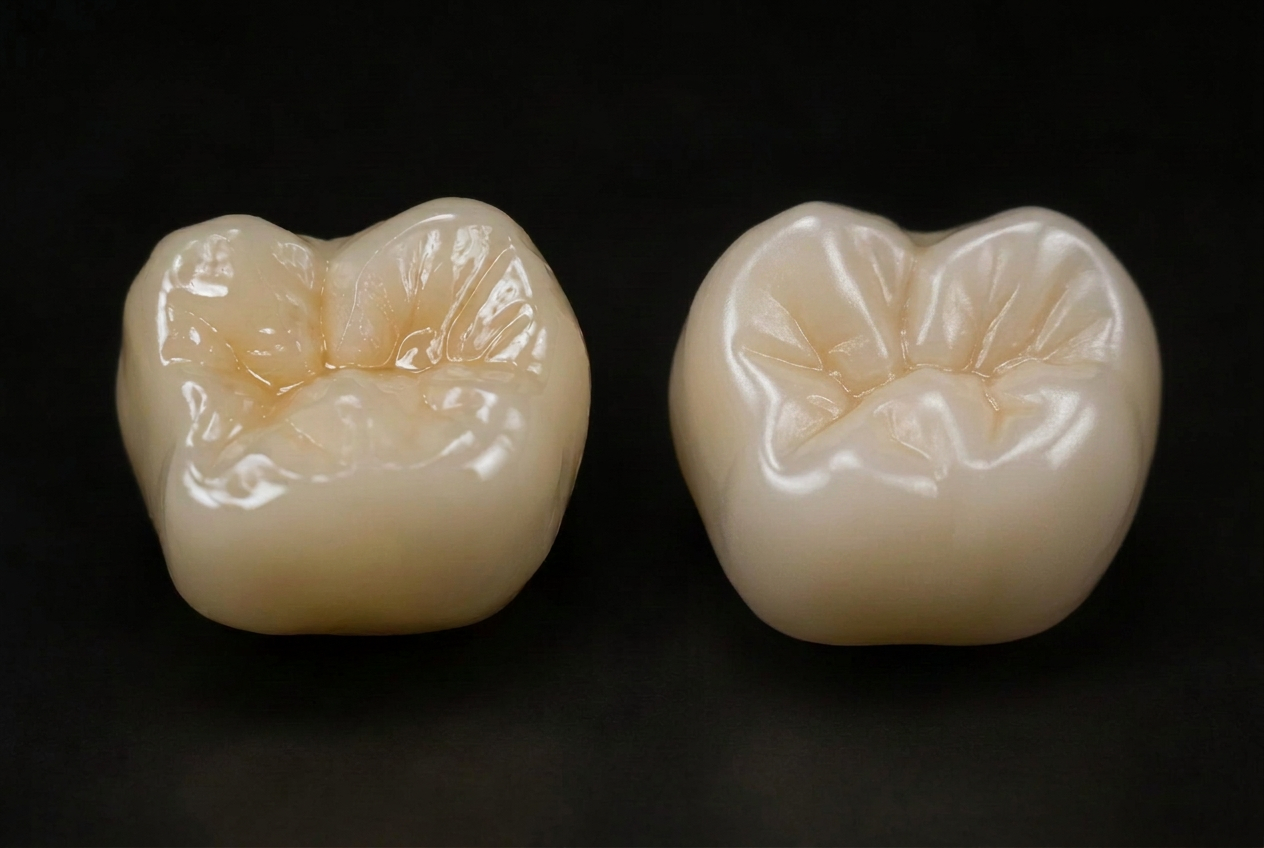
When selecting a surface finish for zirconia restorations, the choice between glazing and polishing plays a meaningful role in long-term performance. Glazed vs Polished Zirconia is not solely an aesthetic decision. Each finish influences wear behavior, surface stability, and overall restoration longevity.
Glazed zirconia provides an initially smooth, glossy surface that enhances esthetics and resists early staining. Polished zirconia, by contrast, produces a mechanically refined surface that often demonstrates more predictable performance under functional load. Understanding these distinctions allows clinicians to make informed decisions that support durable, clinically stable outcomes.
Clinical literature consistently shows that zirconia surface finish directly affects wear mechanisms, opposing dentition, and long-term restoration performance.
Zirconia Strength and Restoration Lifespan
Zirconia is well established as a high-strength ceramic material in restorative dentistry. Its fracture toughness and resistance to chipping allow it to outperform many traditional ceramics across a range of clinical scenarios.
Long-term evaluations frequently demonstrate zirconia restorations maintaining structural integrity for years with minimal surface degradation when appropriate finishing protocols are used. This reliability contributes to fewer remakes and replacements, supporting extended restoration lifespan and improved patient satisfaction.
Key mechanical advantages of zirconia include:
-
High resistance to fracture compared to conventional ceramics
-
Consistent performance in crowns, bridges, and implant-supported restorations
-
Stable material properties that support long-term durability
Ongoing advancements in zirconia processing and finishing techniques continue to reinforce its role as a dependable restorative material where longevity is a priority.
How Surface Roughness Influences Wear Rates
Surface roughness is a critical variable in the wear behavior of zirconia restorations. Increased surface irregularities elevate friction during occlusion, which can accelerate wear of both the restoration and opposing dentition.
Polished zirconia surfaces typically achieve lower and more stable roughness values than glazed surfaces after clinical adjustment. This smoother profile reduces wear patterns during mastication and supports more predictable long-term clinical performance.
In restorations exposed to higher occlusal forces, minimizing surface roughness is essential for maintaining both material integrity and patient comfort.
The Role of Surface Treatment in Clinical Performance
Surface treatment directly influences zirconia’s functional and esthetic outcomes. Finishing protocols aim to create a smooth, stable surface that maintains its properties throughout the restoration’s service life.
Lower surface roughness contributes to:
-
Improved wear resistance
-
Greater surface stability over time
-
Reduced plaque retention
-
Enhanced patient comfort
While glazing may provide short-term esthetic benefits, polishing after occlusal adjustment is commonly recommended to preserve surface smoothness long term.
Longevity Comparison: Glazed vs Polished Zirconia
When comparing Glazed vs Polished Zirconia, differences in longevity become more apparent under functional loading.
Glazed zirconia offers:
-
Strong initial esthetics
-
Improved stain resistance
-
Uniform surface appearance
However, glaze layers may wear away over time, particularly in high-contact areas, potentially exposing a rougher underlying surface.
Polished zirconia provides:
-
Long-term surface smoothness
-
Reduced wear on opposing dentition
-
Greater durability following clinical adjustments
Although polished surfaces may develop minor surface changes over extended use, their wear behavior remains more consistent and predictable in functional zones.
Maintenance Considerations for Long-Term Performance
Maintenance plays a significant role in preserving the longevity of zirconia restorations, regardless of surface finish. Patients should be advised to avoid abrasive oral hygiene products and adhere to routine professional cleanings.
Proper maintenance supports:
-
Sustained surface smoothness
-
Reduced plaque accumulation
-
Long-term esthetic stability
Consistent follow-up care contributes directly to favorable clinical outcomes and patient satisfaction.
Aesthetic Characteristics of Glazed and Polished Finishes
From an esthetic standpoint, glazed zirconia is characterized by a smooth, reflective surface that closely mimics enamel. This makes it suitable for cases where immediate visual impact and stain resistance are priorities.
Polished zirconia offers a refined, natural appearance with stable optical properties over time, particularly after occlusal adjustments. While initially less glossy than glazed surfaces, polished zirconia often maintains its appearance more consistently throughout the restoration’s lifespan.
Glazed Zirconia
-
Smooth, glossy surface
-
Enhanced stain resistance
-
Consistent color appearance
Polished Zirconia
-
Natural light reflection
-
Improved functional wear resistance
-
Stable surface after adjustment
Clinical Guidelines for Finish Selection
The choice between glazed and polished zirconia should be guided by functional demands rather than aesthetics alone. Clinicians should consider:
-
Occlusal load and wear risk
-
Restoration location
-
Long-term maintenance expectations
-
Patient comfort and preferences
Aligning surface finish selection with clinical requirements supports predictable longevity and optimal restorative outcomes.
For broader context on zirconia materials, surface treatments, and restorative decision-making, explore our Dental Education Hub, where related topics are covered in greater depth to support long-term clinical success.
Looking for more? Browse our full library of dental education resources.
Back to Education Center