
Noticing food getting stuck around a newly placed dental crown can be uncomfortable and concerning. For many patients, this raises an important question: is this part of normal healing, or does it indicate a problem such as an open contact?
Understanding the difference helps patients know what to expect after crown placement and when follow-up care may be needed.
Why Food Gets Stuck After Crown Placement
After a crown is placed, the surrounding teeth and gums may need time to adapt. Mild food trapping can occur temporarily as the gums heal or as the bite settles. In these cases, discomfort is usually minimal and improves within the first couple of weeks.
However, persistent food trapping in the same spot often points to a contact issue between the crown and the neighboring tooth rather than normal healing.
What Is an Open Contact?
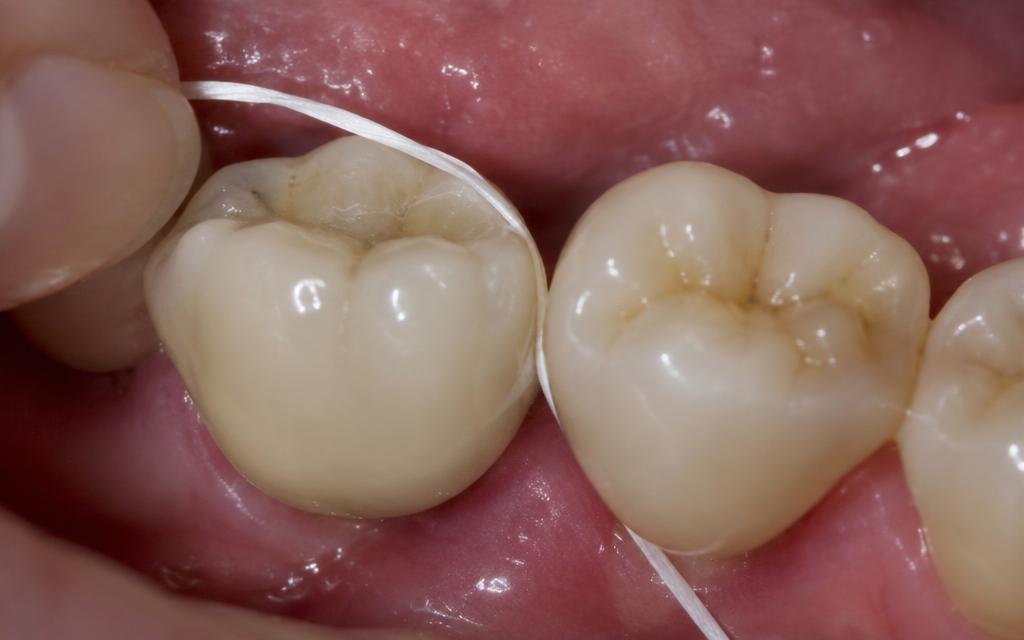
An open contact occurs when there is a small gap between the crown and the adjacent tooth. These gaps allow food particles to wedge into the space during chewing, making the area difficult to keep clean.
Unlike normal healing-related sensitivity, open contacts tend to cause repeated food impaction in the same location, even with careful brushing and flossing. Over time, this can irritate the gums and increase the risk of inflammation or decay.
Normal Healing Versus a Contact Problem
Normal healing typically involves mild soreness or temporary sensitivity that gradually improves. Food may occasionally catch but does not consistently pack into one specific area.
Open contacts, on the other hand, often cause ongoing frustration. Patients may notice they need to floss after every meal, experience gum tenderness between teeth, or feel pressure when food becomes lodged.
If food consistently packs between the crown and the neighboring tooth beyond the early healing period, a dental evaluation is recommended.
Why Open Contacts Matter
When food remains trapped around a crown, plaque and bacteria can accumulate more easily. This may lead to gum inflammation, bleeding, or discomfort. Left unaddressed, open contacts can also contribute to decay on adjacent teeth or compromise the long-term success of the restoration.
Early correction helps protect both the crown and the surrounding teeth.
Managing Food Trapping Around a Crown
Good oral hygiene is essential, especially around new restorations. Gentle flossing, interdental brushes, and rinsing after meals can help manage minor food trapping during healing.
However, hygiene alone will not correct an open contact. If the issue persists, a dentist can evaluate the contact and determine whether an adjustment or correction is needed.
When to Contact Your Dentist
You should contact your dentist if food consistently becomes stuck in the same area around a crown, if the gums become sore or inflamed, or if discomfort worsens rather than improves over time.
Addressing contact issues early helps prevent complications and ensures the crown functions comfortably and effectively.
For more information on crown fit concerns, healing expectations, and common restoration issues, visit our Dental Education Hub, where related topics are organized to help patients better understand treatment outcomes and next steps.
Looking for more? Browse our full library of dental education resources.
Back to Education Center