Dentistry has always been equal parts science and artistry, and at the heart of this balance lies the dental lab. A dental lab is where the technical artistry of creating crowns, bridges, dentures, implants, and aligners comes to life. For decades, these labs have provided the backbone for restorative dentistry, enabling dentists to restore not just teeth but confidence and function in patients.
Today, the role of the dental lab is changing dramatically. What began as manual, craft-driven work has transformed into a hub of digital innovation, precision technology, and streamlined workflows. Understanding this evolution is key for dentists deciding how to best serve their patients.
The Origins of the Dental Lab
Before the digital revolution, dental labs relied almost exclusively on manual craftsmanship. A typical workflow in the mid-20th century involved:
-
Dentists taking physical impressions using alginate or silicone materials.
-
Creating stone models that represented the patient’s teeth.
-
Designing wax-ups and using lost-wax casting to shape crowns and bridges.
-
Repeated cycles of trial, error, and adjustment to get an accurate fit.
This process demanded incredible skill, patience, and a steady hand. The artistry of early dental technicians cannot be understated—they sculpted, layered porcelain, and hand-finished each piece. However, traditional methods also came with challenges: long turnaround times, potential errors at every stage, and limited reproducibility.
For dentists, that meant treatment plans stretched over weeks, sometimes requiring multiple patient visits. While patients appreciated the artistry, they often endured delays and occasional frustration when restorations didn’t fit correctly on the first try.
Why Dentists Have Always Needed Dental Labs
Even as new chairside technologies enter the market, dental labs remain indispensable for most practices. Here’s why:
-
Specialization: Not every dentist can invest in milling machines, sintering ovens, or 3D printers. Labs pool these resources and make them accessible.
-
Expertise: Lab technicians train extensively in design and materials science. They understand zirconia, lithium disilicate, PMMA, and resin workflows in ways most dentists don’t have time to master.
-
Efficiency: Outsourcing complex restorations allows dentists to focus on chairside care. The lab handles the intricate work, freeing up valuable appointment time.
-
Consistency: Labs maintain quality control processes that minimize remakes. They serve as a reliability buffer between what’s planned in the clinic and what’s delivered to the patient.
Dentists who partner strategically with labs can elevate their practice by combining their clinical expertise with the lab’s technical mastery.
The Rise of Digital Dentistry
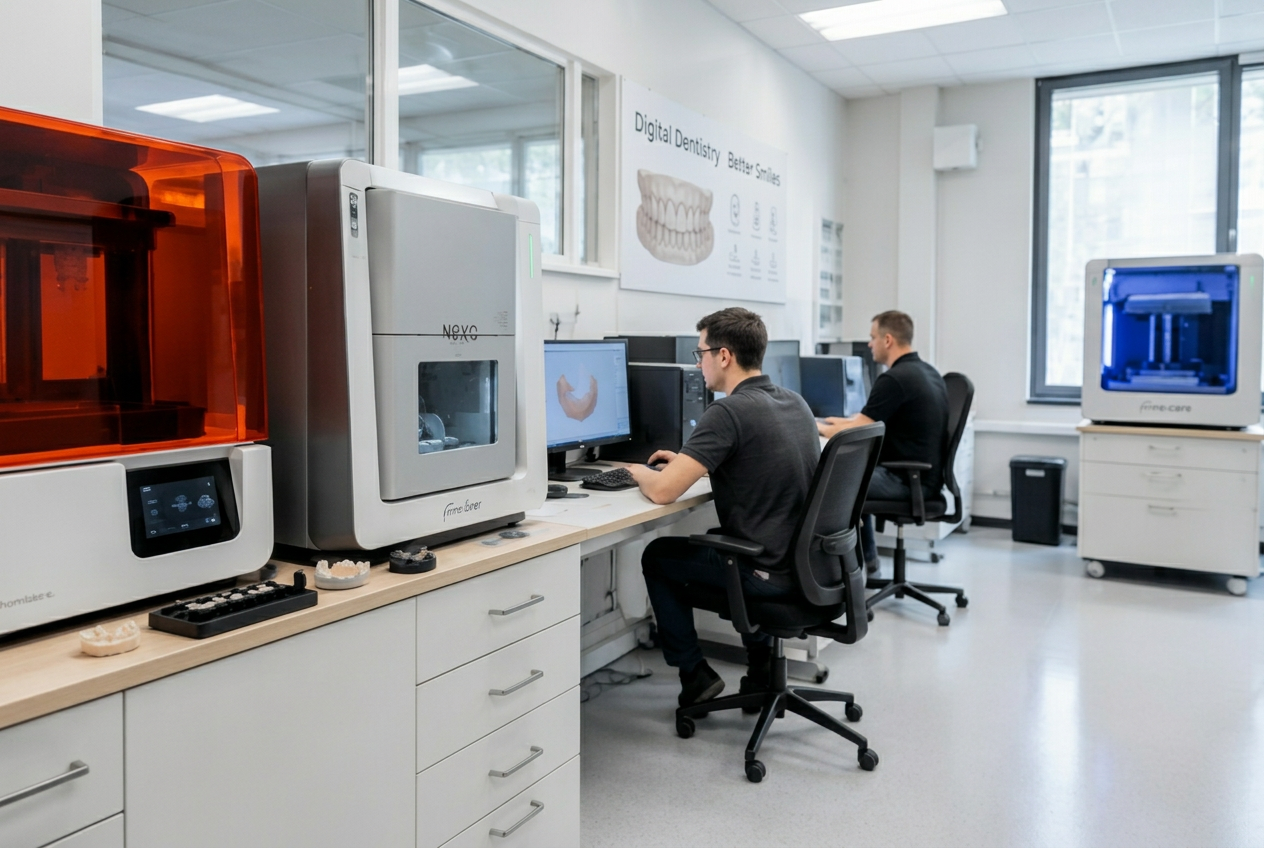
The 21st century introduced a seismic shift: digital dentistry. With digital impressions, CAD/CAM design, and 3D printing, labs evolved from purely artisanal studios into tech-driven manufacturing centers.
Digital Impressions
Intraoral scanners eliminated the mess and discomfort of traditional molds. Dentists can now send a scan directly to the lab within minutes, avoiding shipping delays and reducing distortion errors. Patients also benefit from the streamlined experience.
CAD/CAM Design
With Computer-Aided Design and Manufacturing, technicians can design crowns and bridges with extreme precision. Automated milling ensures restorations fit more consistently than ever before. What once took two weeks can often be achieved in 24–48 hours.
3D Printing
For models, splints, surgical guides, and even certain permanent restorations, 3D printing has revolutionized prototyping and production. Costs are lower, waste is reduced, and turnaround is dramatically faster.
Communication Upgrades
Digital workflows also introduced real-time collaboration. Dentists can review virtual designs before fabrication, request adjustments instantly, and track case progress through software dashboards. This kind of transparency was unimaginable in the analog era.
Traditional vs. Digital Labs: A Comparison
| Aspect | Traditional Lab | Digital Dental Lab |
|---|---|---|
| Impressions | Alginate, silicone, stone models | Digital scans, cloud-shared files |
| Turnaround Time | 1–3 weeks | 24–72 hours |
| Error Rate | Higher (distortion, breakage) | Lower (direct digital input) |
| Communication | Phone calls, shipping delays | Real-time design review |
| Storage of Records | Physical molds prone to damage | Digital archives, reusable files |
| Patient Experience | Messy, multiple visits | Comfortable, fewer appointments |
This contrast shows why more dentists are embracing digital labs as core partners.
Case Example: The Power of Digital Workflows
Consider a clinic that transitioned from a traditional lab to a digital dental lab. Before the shift, crowns often took 10–14 days and required at least one adjustment visit. After adopting digital workflows:
-
Crowns were delivered in 2–3 days.
-
Adjustments dropped thanks to improved fit.
-
Patient satisfaction scores rose, leading to more referrals.
This is not an isolated case—it’s the story of thousands of practices worldwide making the same transition.
The Patient Perspective
Patients don’t always know what happens behind the scenes at a dental lab, but they feel the difference:
-
Faster treatment: Digital labs shrink wait times from weeks to days.
-
Fewer appointments: Well-fitting restorations reduce the need for follow-ups.
-
Better esthetics: Digital layering and precise shading match natural teeth more closely.
-
Confidence: When patients see preview models or mock-ups, they feel more in control of the outcome.
In many cases, patients are pleasantly surprised to leave with a crown or aligner much sooner than expected—something only possible with modern digital workflows.
Spotlight: Three D Smiles
A great example of a forward-thinking dental lab is Three D Smiles, a fully digital lab that partners exclusively with practices using intraoral scanning. Their approach embodies the best of modern dental technology:
-
Turnaround: Many cases are completed in 24 hours, compared to weeks at a traditional lab.
-
Precision: With remake rates under 1%, they deliver consistently accurate results.
-
Customization: From crowns and bridges to clear aligners and splints, they tailor every case with meticulous digital craftsmanship.
For dentists curious about embracing a digital-first partnership, the Work With Us page at Three D Smiles offers a practical starting point.
Educational Role of Modern Dental Labs
Today’s labs are not just vendors—they are educational partners. Many provide training in scanning techniques, CAD design, and case planning. They often host workshops or webinars, helping dentists and staff adopt digital workflows effectively. This collaboration reduces learning curves and empowers practices to offer cutting-edge services confidently.
Future Trends in Dental Labs
The story of the dental lab is still unfolding. Looking ahead, several trends stand out:
-
AI-Driven Design: Algorithms will assist in designing crowns, bridges, and aligners with even greater speed and accuracy.
-
Expanded Materials: New zirconia formulations and biocompatible resins are making restorations stronger and more natural-looking.
-
Fully Integrated Platforms: End-to-end systems will connect clinics, labs, and even suppliers in real time.
-
Same-Day Dentistry Partnerships: Labs and practices may integrate even more tightly, enabling “scan in the morning, deliver by afternoon” workflows in select cases.
These innovations will continue to make dental care faster, more affordable, and more patient-centered.
Final Thoughts
The dental lab has come a long way—from wax-ups and stone models to CAD/CAM precision and AI-assisted workflows. For dentists, partnering with the right lab is no longer optional; it’s a competitive advantage.
Traditional labs laid the foundation, but digital labs are redefining the standard: faster, more accurate, and more collaborative. Patients notice the difference in speed, comfort, and esthetics.
Labs like Three D Smiles show what’s possible when technology, craftsmanship, and partnership converge. For practices ready to elevate efficiency and patient outcomes, exploring digital lab collaborations is the next logical step.
Looking for more? Browse our full library of dental education resources.
Back to Education Center