
Mastering the crown prep procedure is essential for creating long-lasting, natural-looking dental restorations. This process involves precise tooth reduction, accurate margin design, gingival management, and—today more than ever—the use of digital scanning and CAD/CAM technology to achieve predictable results.
Why the Crown Prep Procedure Matters
The success of any dental crown starts with proper preparation. A well-executed crown prep procedure ensures:
-
Enough space for restorative material without over-reducing tooth structure.
-
Accurate margins for strong crown seating.
-
Improved patient comfort and long-term durability.
By incorporating digital workflows, clinicians can now deliver restorations faster and with greater precision.
Optimal Tooth Reduction
Tooth reduction is the foundation of the crown prep procedure. The goal is to remove just enough structure for the crown to fit securely, while preserving as much natural tooth as possible.
-
Occlusal clearance: 1.5–2.0 mm, depending on crown material.
-
Axial reduction: 1.0–1.5 mm with smooth, tapered walls.
-
Margin design: chamfer or shoulder margins are most common for ceramics.
Digital scanners now allow real-time measurement of reduction depth, helping dentists avoid errors and unnecessary tooth loss.
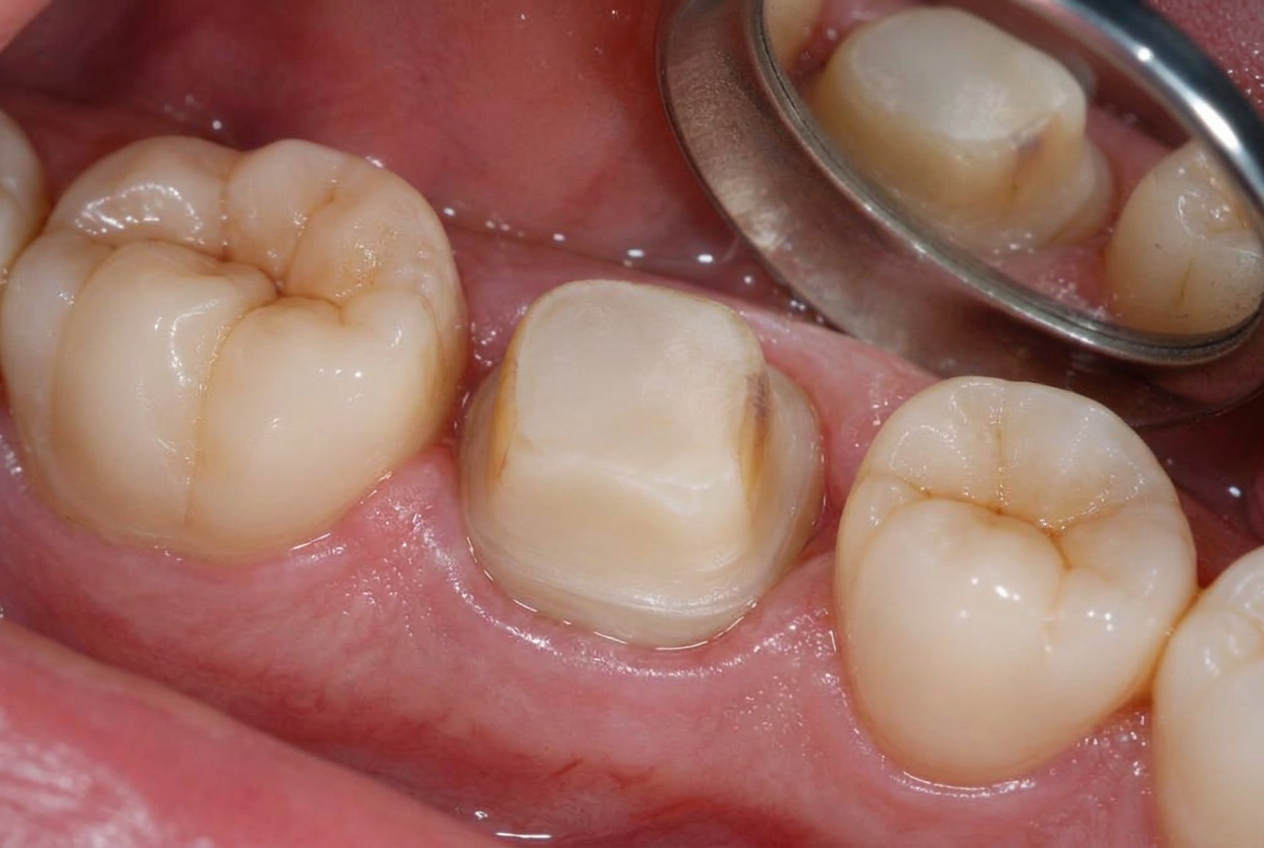
Understanding Tooth Anatomy
The success of a crown relies on how well it fits the patient’s unique dental anatomy. Factors like cusp height, angulation, and contact points influence both reduction and restoration design.
With intraoral digital scanning, clinicians can instantly visualize preparation depth and occlusal relationships, ensuring accuracy before finalizing the prep.
Gingival Retraction for Clear Margins
Even the most advanced scanner cannot capture hidden crown margins. Effective gingival retraction is vital during the crown prep procedure.
-
Retraction cords expose subgingival margins.
-
Hemostatic agents reduce bleeding and maintain tissue health.
-
Combined mechanical + chemical techniques yield the most reliable results.
Clear, well-defined margins improve scanning accuracy and ensure better crown adaptation.
Digital Scanning & CAD/CAM Technology
Digital dentistry has transformed the crown prep procedure by eliminating traditional impression materials.
Benefits of digital scanning:
-
Real-time feedback on undercuts or insufficient reduction.
-
Seamless integration with CAD/CAM for same-day crowns.
-
No risk of distortion from impression material shrinkage.
-
Enhanced patient experience without messy trays.
Labs also benefit from instant digital files, reducing turnaround times and improving communication with dentists.
Provisional Crowns
Temporary crowns remain a critical step in the crown prep procedure. They:
-
Protect the tooth from sensitivity.
-
Maintain occlusion and esthetics.
-
Shape gingival tissue for better final crown seating.
Digital design software allows provisional restorations to be fabricated quickly and accurately, reducing chairside adjustments.
Conclusion
A successful crown prep procedure balances technical precision with modern digital workflows. By mastering tooth reduction, gingival retraction, and margin design—and leveraging digital scanning and CAD/CAM systems—dentists can achieve restorations that are accurate, efficient, and comfortable for patients.
Read more:
Can Dental Impressions Pull Out Crowns
Looking for more? Browse our full library of dental education resources.
Back to Education Center