
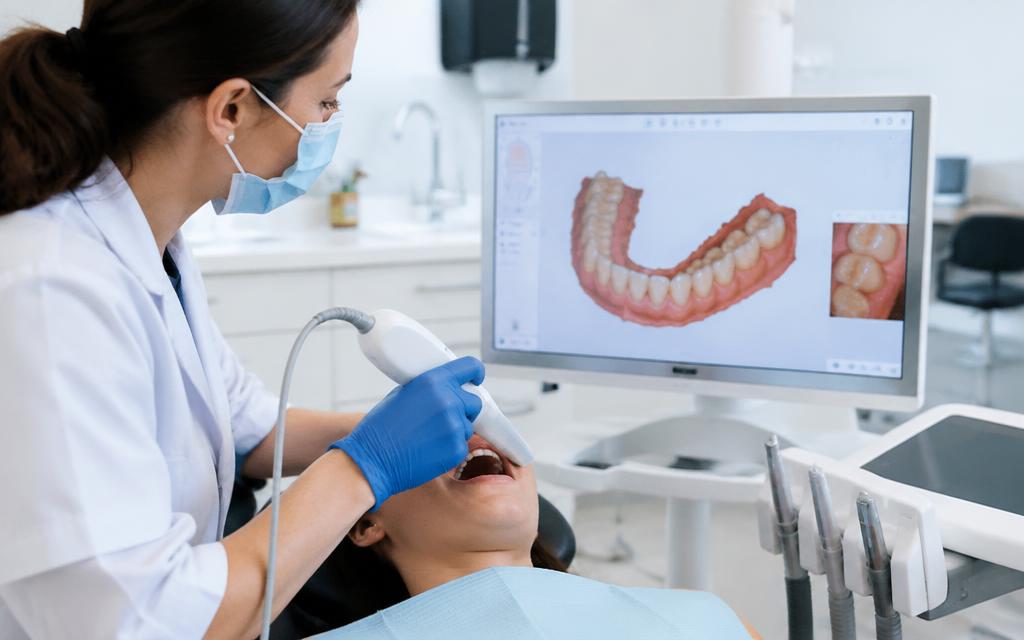
The emergence of 3D intraoral scanners has ushered in a new era in dental practices, fundamentally altering how treatments are approached. These advanced devices enhance patient experiences and dramatically improve treatment outcomes.
With superior precision scanning and efficiency, they eliminate the discomfort associated with traditional methods.
For dental professionals, digital workflows streamline the treatment process, enabling a more effective and user-friendly approach to dental care.
Let’s explore the innovative features of these scanners and how they are reshaping dental diagnostics.
Discover the Benefits of 3D Dental Scanning
Emphasizing 3D dental scanning offers a leap in diagnostic accuracy, overcoming limitations of traditional imaging methods. Traditional techniques often involve uncomfortable physical impressions, resulting in inaccuracies that impede proper treatment planning.
By adopting intraoral imaging, dentists significantly improve patient comfort, particularly when it comes to gag reflex challenges.
Key Advantages of 3D Dental Scanning
- Enhanced Diagnostic Precision: Intraoral visualization allows for high-resolution imaging that captures the nuances of the oral cavity.
- Comfort for Patients: The patient-friendly technology reduces discomfort and anxiety, making dental visits more pleasant.
- Streamlined Workflows: Digital workflows and CAD technology facilitate faster case management and manufacturing of restorations.
- Improved Treatment Planning: Accurate fit technology supports better restorative dentistry outcomes.
By utilizing scanning devices, dental professionals can engage in real-time scanning and chair-side scanning, leading to quicker decision-making and enhanced patient interaction tools. The overall impact of 3D imaging systems is profound, enabling faster turnaround times in the lab and superior craftsmanship in dental restorations.
Adopting dental digitalization not only boosts clinical efficiency but also fosters seamless communication between practitioners and digital dental labs. This integration enhances the precision of dental prosthetics, ultimately benefiting patient outcomes.
The continuous evolution of dental health technology demonstrates how vital digital impressions are in creating aesthetic restorations, supporting rapid prototyping, and enabling virtual treatment planning. With dental clinic software and laboratory integration, the future of dentistry looks brighter than ever.
How Digital Impressions Enhance Accuracy In Dental Restorations
The implementation of digital impressions plays a pivotal role in modern restorative dentistry, significantly minimizing human error compared to traditional methods. By utilizing 3D dental scanning technology, practitioners can capture intricate details of the oral cavity, resulting in precise restorations that eliminate the inconsistencies associated with manual impressions.
This advancement has also led to enhanced efficiency in dental workflows, allowing practitioners to manage cases more effectively.
Quicker turnaround times contribute to increased patient satisfaction, as individuals receive high-quality, precisely fitted restorations faster than before.
To seamlessly integrate digital impressions into everyday practices, dental professionals should focus on:.
- Investing in comprehensive training for staff.
- Standardizing workflows to maintain consistency.
- Utilizing digital technology for optimal clinical efficiency.
Advancements In Intraoral Imaging Techniques
Recent innovations in intraoral imaging have transformed how dental professionals approach diagnostics and treatment planning. The development of high-resolution imaging solutions not only enhances the clarity of visuals available to patients but also facilitates deeper engagement and communication about their dental health. This technology empowers patients to comprehend complex treatment plans through detailed virtual models.
Selection of Imaging Techniques
Choosing the appropriate imaging method for specific cases can significantly influence treatment outcomes. Practices should consider:
Such integration promotes effective collaboration, ensuring tailored treatments that meet individual patient needs. With dental digitalization at the forefront, practitioners can use various techniques, including:
- 3D imaging systems for comprehensive views.
- Realtime scanning for immediate feedback.
- Virtual treatment planning to optimize outcomes.
The advancement of imaging technology not only improves the accuracy of diagnostics but also enhances the overall quality of dental applications. The shift toward dental health technology is imperative for practices striving for excellence in patient care.
Digital Impressions and Imaging Techniques
- Digital impressions reduce human error by capturing intricate details with 3D dental scanning technology.
- High-resolution intraoral imaging enhances patient engagement and understanding of complex treatment plans.
- Integration of advanced scanning solutions with CAD/CAM systems improves communication within dental teams.
- Utilizing realtime scanning provides immediate feedback, optimizing treatment outcomes.
Transforming Restorative Dentistry With CAD Technology
CAD technology has revolutionized restorative dentistry by enhancing design and manufacturing processes. This advanced technology streamlines workflows with digital impressions, reducing manual errors while improving accuracy.
Clinics that have adopted CAD systems report significant increases in efficiency, enabling the production of high-quality restorations in record time.
Practices implementing CAD/CAM integration, for example, have witnessed improved patient satisfaction due to faster turnaround times and a precise fit of dental prosthetics.
Training for Effective CAD Usage
To maximize the benefits of CAD technology, training staff effectively is essential. Conducting workshops that focus on hands-on practice with 3D imaging systems can empower dental professionals to leverage digital workflows efficiently. Access to educational resources provided by technology suppliers further deepens staff understanding, fostering a confident team capable of delivering exceptional patient care.
Effective training in CAD technology is key to unlocking its full potential in restorative dentistry.
By incorporating advanced scanning solutions and optimizing clinical workflows, dental practices can ensure not only a high level of patient interaction but also improved outcomes in terms of accuracy and efficiency. Investing in digital technologies allows for the seamless integration of scanning devices, enhancing imaging precision and enabling practices to stay ahead in the field of restorative dentistry.
CAD Technology in Dentistry
- CAD technology reduces manual errors and improves accuracy in restorative procedures.
- Practices using CAD/CAM integration report enhanced patient satisfaction due to quicker turnaround times.
- Digital dental labs streamline workflows by allowing direct uploads of digital impressions for manufacturing.
- Effective training in CAD technology leads to improved staff confidence and exceptional patient care.
Looking for more? Browse our full library of dental education resources.
Back to Education Center